How to write a restaurant menu that is easy to order from
Fewer dishes, the order people actually read in, names that say what the dish is, and prices without a dollar sign. What the menu studies found.
Updated 4 min read
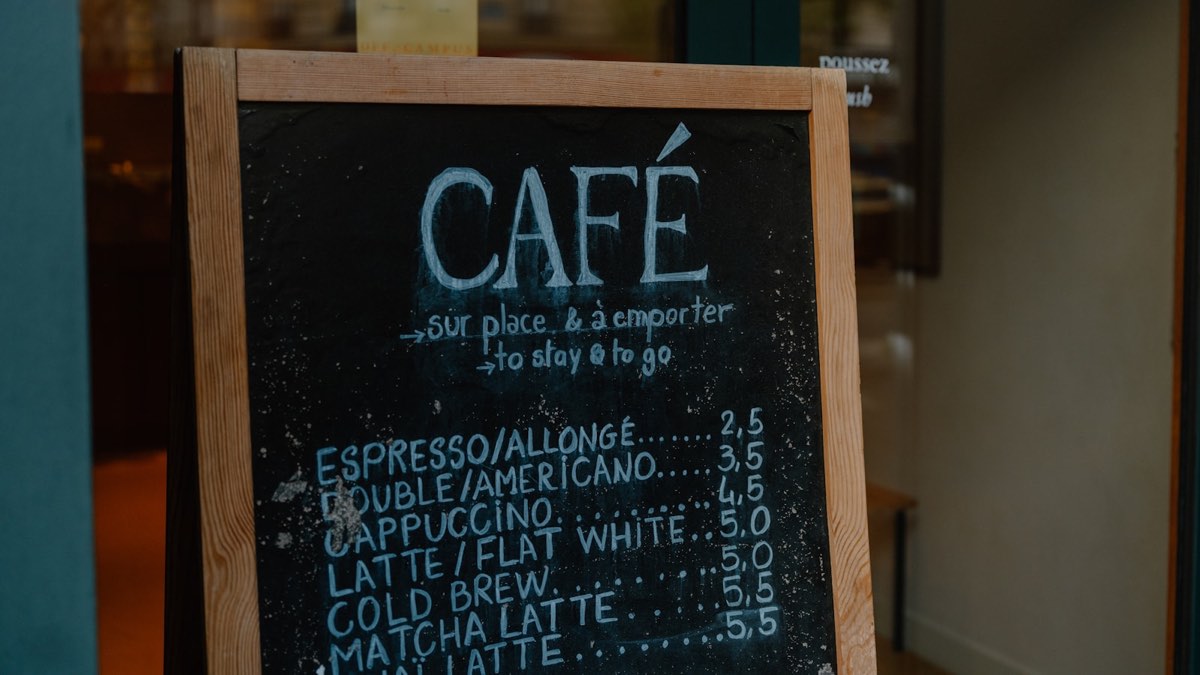
People read a menu in order. Top to bottom, left to right, and they read it carefully.
That is what an eye-tracking study at San Francisco State University found in 2012. There was no special spot on the page that everyone looks at first. There was an order.
So a good menu is not a design trick. It is a short, clear list in the order people read, with names they understand and prices that are easy to read.
Here is how to write one. It takes an afternoon.
Fewer dishes
Start by cutting. A long menu feels generous to you and feels like work to the customer.
In a famous study from 2000, shoppers saw a tasting table with 24 kinds of jam or a table with 6. The big table drew more people. The small table sold ten times more: 30% of the people who stopped bought a jar, against 3% at the big one.
A menu is a list of choices too. When there are too many, people pick the safe thing or nothing new at all.
Aim for five to eight dishes in each section. Keep the ones people order, the one or two you are known for, and one for customers who eat no meat. Cut the dish nobody has ordered in a month.
A shorter menu also means less waste in the kitchen and faster service.
The order people read in
The same study saw people choose the main dish first, then build the rest of the meal around it.
So put your mains at the top of the page, where people start reading, or first after the starters. Inside each section, the first dish gets read first. Put the one you want to sell there, and the dish you are known for right after it.
Group dishes the way people think about them: starters, mains, sides, sweets, drinks. Not by price and not by what the kitchen finds convenient.
If a dish is special, give it a short section of its own at the top. Do not mark half the menu as special. Then nothing is. A weekday special with a name goes in that section too. It is one of the five things that fill slow days.
Names, prices and one photo
A dish name should say what it is in three or four words. "Grilled chicken, roast potatoes, lemon" tells a hungry person everything. "Chef's delight" tells them nothing and makes them ask.
Under the name, one line. The ingredient someone might ask about, the way it is cooked, and how spicy it is. That is all.
Mark allergens next to the dish. The nine major allergens in the US are milk, eggs, fish, shellfish, tree nuts, peanuts, wheat, soybeans and sesame. Federal law requires that list on packaged food, not on menus, but customers ask, and a small mark saves your staff the question.
Then the prices. A Cornell study from 2009 tested three ways of writing the same prices in a restaurant: "$18.00", "eighteen dollars" and plain "18". Customers who saw the plain number spent more.
8%
more spent, about $5.55, when prices were plain numbers with no dollar sign and no cents. (Yang, Kimes and Sessarego, Cornell, 2009)
The researchers' explanation is simple: the word "dollars" and the "$" sign remind people that they are paying. A plain number does not.
So write "18", not "$18.00". Put the price at the end of the description, not in a neat column on the right, so people read the dish before they read the cost.
Last, photos. One photo per section, of the dish you most want to sell, taken in daylight on a clean plate. More than that and the page gets long, and the photos stop standing out.
One more thing: keep one version of it.
Most menus end up in four places: a PDF on the website, paper on the table, a board on the wall and a list on Google. When one changes and the others don't, customers see two prices for the same dish.
Keep one master copy, and change every other place from it on the same day.
The one mistake. Most first menus list everything the kitchen can make. That is the menu of a cook, not of a restaurant.
Write the menu for the person choosing, not for the person cooking. Short list, clear names, plain numbers, in the order they read.
It is also the clearest way to show what your place is. In the study of why restaurants close in their first years, a clear idea of the place was the biggest difference between the owners who lasted and the ones who did not.
Common questions
- How many items should a restaurant menu have?
- There is no fixed number, but fewer sells better than more. In a well-known study, a table with 6 jams sold to 30% of the people who stopped, and a table with 24 jams sold to 3%. Five to eight dishes per section is a good place to start.
- Should menu prices have a dollar sign?
- No. In a Cornell study from 2009, customers who saw prices as plain numbers, like 18, spent about 8% more than customers who saw $18.00 or the price written in words.
Sources
- Eye movements on restaurant menus: A revisitation on gaze motion and consumer scanpaths, Sybil S. Yang, International Journal of Hospitality Management 31(3) (2012)
- $ or Dollars: Effects of Menu-price Formats on Restaurant Checks, Sybil S. Yang, Sheryl E. Kimes and Mauro M. Sessarego, Cornell Hospitality Report (2009)
- When Choice is Demotivating: Can One Desire Too Much of a Good Thing?, Sheena S. Iyengar and Mark R. Lepper, Journal of Personality and Social Psychology 79(6) (2000)
- Food Allergies: the nine major food allergens, U.S. Food and Drug Administration (2023)
Nicolae Cojuhari · Software Engineer and Food Lover. Founder of 1FoodMenu.
Read next
Should restaurant menus include photos? Yes, with one rule.
Photos next to plain dish names raise what people pay and order, three studies found. The one rule, and how to take menu photos with a phone.
· 4 min read
Do restaurants need a website? One page is enough.
77% of customers look at a restaurant online before they go and 68% have been put off by what they found. What they check, and what one page needs.
· 4 min read
How many restaurants fail in the first year? Not 90%.
Two studies that followed real restaurants found 17% and 26% closed in the first year. Where the 90% line came from, and what the survivors did.
· 3 min read